[Easy English Blog] Yomegashima

DSC07739

Yomegashima is a small island in Lake Shinji in Matsue City, Shimane Prefecture, Japan. Lake Shinji is the seventh largest lake in Japan. In the mornings, there are many fishing boats on the lake. The owners of the boats go into the water and collect shijimi clams. In the evening, the sun sets over Lake Shinji. It sets behind Yomegashima island. Many people gather to watch the sunset and take photographs.

DSC07641

Yomegashima is a sacred island. It has a torii shrine gate, and many pine trees. Normally, people cannot visit the island, but once a year, there is a walking event. People walk through the water to the island. A few years ago, there was a tea ceremony event on the island. Boats took visitors to the island for a tea ceremony. I went with my friend. The scenery was beautiful.

DSC07711

The name “Yomegashima” means “bride’s island”. It has a sad story. According to a local legend, a young bride was homesick. She wanted to leave her husband’s house and go to her own family. So, she walked across the lake when it was frozen. Unfortunatley, she fell through the ice into the water and drowned.

The gods made an island in the spot where the young bride drowned.

If you visit Matsue, make sure you visit Lake Shinji and see Yomegashima. I recommend you go at sunset time. It is really beautiful.

[Short Story] Saori makes her own luck

person capturing tree

Photo by sum+it on Pexels.com

It’s Monday morning. Saori has no classes today, so she decides to clean her apartment. It takes a long time and it is almost 11:30am when she is finished. Next to the door are bags of bottles and jars and a pile of old magazines.

I take those to the recycling station, she thinks.

Saori ties some string around the magazines.

She puts on her jacket, and puts her keys and smartphone in her pocket.

She picks up the bags and the bundle of magazines and leaves her apartment.

The recycling station is at the local community centre.

It is a cold windy day, and Saori hurries along the road to keep warm.

Even thought the weather is not good, there is a group of older people outside the community centre. They are practising Tai Chi.

Saori puts the magazines in the paper recycling crate, and walks along to the bins of different coloured glass. There is a cage for clear glass, a cage for green glass and a cage for brown glass.

She is careful to put the glass bottles into the correct cage, but she makes a mistake.

Oh no! I have put a wine bottle into the clear glass cage. I must take it out.

Saori is not very tall, and it is difficult to reach the wine bottle. She leans over the edge of the cage. I’ve got it! Now I’ll just put it in the green bottle cage and I can go home, she thinks.

Saori doesn’t notice, but her smartphone has fallen out of her pocket. It is in the cage full of clear glass.

When Saori gets back to her apartment she thinks, I’ll call Michiko. She doesn’t have classes today. Maybe we can meet for coffee.

She puts her hand in her pocket. Where is my phone! It’s not here. I have lost it! Where did I lose it?

Saori remembers leaning over the recycle cage. Did it fall out of my pocket?

She runs out of her apartment. She runs to the recycling station. Oh no! The bins are empty! Someone has come and taken all the bottles and glass away!

Saori wants to cry. My phone! It has all my contacts! No one can call me. No one can text me! And it was so pretty!

 “Excuse me.”

Saori is surprised. There is an old woman standing next to her. “Are you looking for something?”

“Yes,” says Saori. “I have lost my smartphone. I think I dropped it in the recycling cage. And now they are empty! My phone has gone!”

The old woman smiles. “Today is your lucky day,” she says.  “When I finished my Tai Chi class, I walked past the recycling station. I saw something pink in the cage for clear glass. I thought ‘that’s not good. I must take it out’. It was too difficult for me. So I called our Tai Chi instructor. He is taller and fitter than me. He rescued your smartphone.”

The old woman puts her hand in the pocket of her track suit. She takes out Saori’s smartphone and gives it to her.

“Oh, thank you!” says Saori. “I am so lucky.”

“You’re welcome,” says the old woman. “But maybe you made your own luck. Your phone is pink. That’s why I saw it. Maybe if it was silver or black I could not see it. I think pink is a good colour for a smartphone. Maybe I will get a new one.”

[Easy English Blog] Chippy tea

I go back to the UK every year. As soon as I arrive at the airport, I go straight to the shop to buy chocolate! Then, when we are driving home, my mother always asks, “Shall we have a chippy tea tonight?”

I’m from north England. In the north, fish and chip shops are called “chippies”. Also, “dinner” is called “tea”. So, “a chippy tea” means to buy dinner from a fish and chip shop.

I always have a chippy tea on my first day back in the UK. I don’t eat fish, so I just have chips, with lots of salt and vinegar. (I know, this is not healthy, but it is only once a year!)

The taste reminds me of my childhood. When I was a child, we sometimes had chippy teas. There was a chippy near my house. My mum used to send me there to buy the fish and chips. The staff wrapped the fish and chips in old newspapers. Some people used to take their own plates and towels. The staff used to put the fish and chips on the plates, and then wrap the plates with the towels so the food stayed warm.

Now, fish and chips are usually served in cartons. I miss the smell of greasy newspaper and chips! I’m going back to the UK in December. As usual, I will have a chippy tea on my first night there. I can’t wait!

[Easy English Blog] We joined Pinterest

black and silver film camera on brown wooden surface

Photo by Tirachard Kumtanom on Pexels.com

We joined Pinterest a few days ago. It’s fun! I could spend hours on it looking at all the beautiful images on the site. I made a board featuring images from our area in Japan. We are based in Shimane, which is a beautiful rural region of the country. I found many images of Shimane for the board. I’m also going to add some of my own.

I also made a board for people who are studying English. If you are studying English, I recommend you look at Pinterest. There are so many resources and links.

Are you on Pinterest? If you are, look us up! We are here!

[Easy English Blog]Driving in Japan

aston martin automobile automotive car

Photo by Gumzito Leruo on Pexels.com

I live in a rural area of Japan, so I need a car to get around. I used a bicycle for a year before I bought my first car. I enjoyed riding my bicycle, but it was hard in winter because we get a lot of snow here. Also, I couldn’t go out of town so easily, because there weren’t many buses or trains. (There still aren’t!)

So, I got a car. I had to get my British licence translated into Japanese, but I think that was all. I didn’t have to take a test. I got my Japanese licence 17 years ago, so maybe the rules have changed now. Driving in Japan is easy for me, because we drive on the left, just like in the UK. The one difference that surprised me was that I had to get snow tires for winter. In the area of the UK where I am from, we used the same tires in winter, even when it was snowy and icy.

When I got my first car in Japan, I started to drive everywhere. I drove to work, the supermarket, my friends’ houses…I’m sure I put on weight! I also drove out to the villages and towns near my city. I also drove to the mountains and the sea. Some of these places are very difficult to get to without a car. I don’t have many problems driving to these places. Even in the countryside, in the small villages and towns, the roads are usually well-maintained.

Autumn is my favourite season. So, every autumn, I drive into the mountains to see the autumn leaves. I hope I have time to go this year. If I do, I’ll take some photographs for this blog. I really don’t like driving in winter though. The main roads are usually fine, but the smaller roads near my house are so icy and slippery. Even with snow tires, my car slides around! The snow was bad early this year. I had to wake up earlier than usual to dig my car out of the snow. But it is better than having no car. So I shouldn’t complain!

[Easy English Blog] Friends in different seasons

landscape nature night relaxation

Photo by Pixabay on Pexels.com

I have friends who live in Australia and New Zealand. We often talk on Skype. Our conversations usually start with the weather. I spoke to my friend in New Zealand today. It is autumn in Japan, but it is spring in New Zealand.

I told her that it was getting cooler here, and she told me that it was getting warmer there. It’s interesting when we speak in winter or summer. When it’s winter here, I have the heater on, and I wear thick sweaters, while she has her windows open and wears a T-shirt!

It’s interesting to hear my friends’ stories about Christmas. I associate Christmas with snow, warm drinks, and hot fires. My friends in the Southern Hemisphere associate Christmas with the beach, or the swimming pool and cold drinks.

I’d like to visit my friends one day. I’d like to go during summertime in Japan. I don’t like the heat, so it will be good to get away from the heat and humidity. It will also be winter in New Zealand and Australia, which means it will be cool, and there won’t be so many insects! I’m really scared of insects. My friend in Australia always tells me stories about the insects in his garden. I don’t want to see them!

[Easy English Blog] Starting I Talk You Talk Press

pen writing notes studying

Photo by Tookapic on Pexels.com

I started I Talk You Talk Press five years ago with two friends. We have all taught English for many years in Japan. We always told our students to read English, because we believe reading is a very important part of English learning. Some of our students listened to our advice and read graded readers. Other students didn’t. They said they didn’t have time, or graded readers were too difficult.

So, we started writing original stories for those students. We knew our students’ English levels, so we wrote stories they could understand. The students were happy that we wrote stories for them. Sometimes, they recommended the stories to other students too. We were also happy that our students enjoyed our stories and were reading in English.

One day, we thought, “if our students enjoy our stories, maybe other English learners will enjoy our stories too.” So we decided to publish our stories as graded readers. Before we started, we spend a year researching publishing and graded reader levels. Then, we started publishing our stories in 2013. We published them on Amazon Kindle, Kobo and Apple. Now, people all over the world are reading our stories. This makes us very happy. Our students are also very happy. We ask them what kind of stories they want to read, and they give us feedback about our stories. They feel special, because we write the stories for them!

Now, I Talk You Talk Press has 60 graded readers. We plan to publish a new one every month. This keeps up busy, but we enjoy it. 🙂

Heather@ I Talk You Talk Press

Gabble

Do you know the English verb “to gabble“? Read the conversation below. Can you guess the meaning?

Terry: Did you understand George’s presentation?

David: No. He was so nervous, he was gabbling. I couldn’t understand anything he said!

Does it mean:

a) speak slowly

b) speak clearly

c) speak quickly and not clearly

d) speak quickly and loudly

The answer is below!↓

black microphone

Photo by freestocks.org on Pexels.com


Answer: c) speak quickly and not clearly

[Easy English Blog]Exercising at work

color colour fitness health

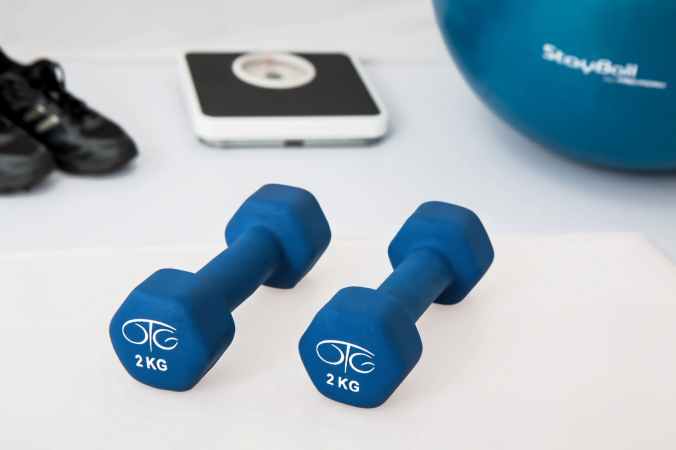
Photo by Pixabay on Pexels.com

I like sports and exercise, but recently, I haven’t been making the time to exercise. At first, I thought I had no time to exercise, but now I realise this is an excuse. I can make time.

I sit at a desk for most of the day. This is not healthy. When I’m working, I concentrate, and I forget to take breaks. Sometimes, I don’t move for three or four hours. So, I decided to change. I have a set of weights next to my desk. Every hour, I stop working, and take a break. I use the weights, or I stretch. I do this for about 5 minutes. It is a short time, but if I work for 9 hours, I exercise for 45 minutes a day.

It also helps me to work better. After taking a break, I feel refreshed. I am going to try to make this routine a habit. Sometimes, when I am concentrating, I forget to stop and take a break, so perhaps I should set an alarm. I can use the timer on my phone to make sure I do 5 minutes.

Now I wonder, if I can make time to exercise, what else can I make time to do?

[Easy English Blog]Soup season

appetizer bowl bread breakfast

Photo by Foodie Factor on Pexels.com

I love soup, especially warm soup on a cold evening. Now that the nights are getting cooler, I make soup quite often. My favourite kinds of soup are sweet potato, mushroom and onion; tomato, onion, spinach and mushroom; and carrot, onion and mushroom. As you can see, I like mushrooms!

It only takes me five minutes to make the soup. That’s because I don’t actually make it. I chop the vegetables, put them in my soup maker and switch it on! I wait 20 minutes, and then I have smooth and hot soup!

I bought my soup maker about 4 years ago, and it is the best kitchen item I have ever bought. It was cheap too, only about 4,000 yen. I can also make smoothies in the soup maker, which is great for breakfast.

This season I’m going to try experimenting with different flavours of soup. I wonder what I will try next…something with mushrooms in it, I’m sure! 🙂