[Easy English Blog] Reading in my native language

toys letters pay play

Photo by Pixabay on Pexels.com

I love reading. Now I read books in English and Japanese. However, about ten years ago, I went through a spell (a spell = a period of time) of only reading Japanese. I wanted to improve my Japanese, so I only read Japanese novels or non-fiction books. I have been a translator for 14 years, so at that time, I was translating. I read Japanese every day at work, and then I read Japanese every night after work.

I translate from Japanese into English, so it is important for me to understand Japanese well. However, it is also important for me to write English well. When I went through the spell of reading only Japanese books, I noticed that my written English was not as good as it used to be. It didn’t seem natural. Also, when I was teaching, students would ask me questions, such as “How do you say XXX in natural English?” Sometimes, it was difficult for me to answer.

I wondered why. Perhaps my brain got used to Japanese phrasing and expression because I was reading so much. Then, I realised something important. I had to maintain my native language too. In English there is a saying – “If you don’t use it, you lose it”. I felt I was losing my English.

So, I decided to start reading again in English. Now, I read more English books than Japanese books. I need to maintain a high level of English for my work. I teach, translate and write in English. So, even though English is my native language, reading English books is a kind of study for me. I still read Japanese books, but not so many. Actually, I would like to read more. Next year, I’m going to try to balance my reading so I read an equal number of Japanese and English books. It’s important to maintain both skills.


[Easy English Blog] Starting I Talk You Talk Press

pen writing notes studying

Photo by Tookapic on Pexels.com

I started I Talk You Talk Press five years ago with two friends. We have all taught English for many years in Japan. We always told our students to read English, because we believe reading is a very important part of English learning. Some of our students listened to our advice and read graded readers. Other students didn’t. They said they didn’t have time, or graded readers were too difficult.

So, we started writing original stories for those students. We knew our students’ English levels, so we wrote stories they could understand. The students were happy that we wrote stories for them. Sometimes, they recommended the stories to other students too. We were also happy that our students enjoyed our stories and were reading in English.

One day, we thought, “if our students enjoy our stories, maybe other English learners will enjoy our stories too.” So we decided to publish our stories as graded readers. Before we started, we spend a year researching publishing and graded reader levels. Then, we started publishing our stories in 2013. We published them on Amazon Kindle, Kobo and Apple. Now, people all over the world are reading our stories. This makes us very happy. Our students are also very happy. We ask them what kind of stories they want to read, and they give us feedback about our stories. They feel special, because we write the stories for them!

Now, I Talk You Talk Press has 60 graded readers. We plan to publish a new one every month. This keeps up busy, but we enjoy it. 🙂

Heather@ I Talk You Talk Press

[Easy English Blog]Exercising at work

color colour fitness health

Photo by Pixabay on Pexels.com

I like sports and exercise, but recently, I haven’t been making the time to exercise. At first, I thought I had no time to exercise, but now I realise this is an excuse. I can make time.

I sit at a desk for most of the day. This is not healthy. When I’m working, I concentrate, and I forget to take breaks. Sometimes, I don’t move for three or four hours. So, I decided to change. I have a set of weights next to my desk. Every hour, I stop working, and take a break. I use the weights, or I stretch. I do this for about 5 minutes. It is a short time, but if I work for 9 hours, I exercise for 45 minutes a day.

It also helps me to work better. After taking a break, I feel refreshed. I am going to try to make this routine a habit. Sometimes, when I am concentrating, I forget to stop and take a break, so perhaps I should set an alarm. I can use the timer on my phone to make sure I do 5 minutes.

Now I wonder, if I can make time to exercise, what else can I make time to do?

[Easy English Blog]Soup season

appetizer bowl bread breakfast

Photo by Foodie Factor on Pexels.com

I love soup, especially warm soup on a cold evening. Now that the nights are getting cooler, I make soup quite often. My favourite kinds of soup are sweet potato, mushroom and onion; tomato, onion, spinach and mushroom; and carrot, onion and mushroom. As you can see, I like mushrooms!

It only takes me five minutes to make the soup. That’s because I don’t actually make it. I chop the vegetables, put them in my soup maker and switch it on! I wait 20 minutes, and then I have smooth and hot soup!

I bought my soup maker about 4 years ago, and it is the best kitchen item I have ever bought. It was cheap too, only about 4,000 yen. I can also make smoothies in the soup maker, which is great for breakfast.

This season I’m going to try experimenting with different flavours of soup. I wonder what I will try next…something with mushrooms in it, I’m sure! 🙂


[Easy English Blog] Coffee morning

six white ceramic mugs

Photo by rawpixel.com on Pexels.com

This morning I went out for coffee with a friend. At the beginning of the year, I decided that I needed to make more time to see friends. Most of my close friends are like me – they work for themselves (have their own companies), so it is difficult for us to schedule time together.

When I first came to Japan, I worked in a language school. When work finished, I often went out with my colleagues for dinner or drinks. Everyone started and finished work at the same time, so it was easy to see friends and go out.

Now, everyone is older. My friends are busy running their businesses, or they have children. I haven’t seen some of my friends for a year or more. The friend I met today is a friend I meet regularly. We usually meet once a week, but I have been busy lately, so we met for the first time in a month. We had a lot to talk about!

Most of my friends work in the afternoon or evening, so meeting in the morning is best for us. My schedule is quite flexible, although I prefer to work in the mornings, because I am more productive in the morning than at any other time of the day. However, chatting with my friend over coffee in the morning gives me energy. I should do it more often.

[Easy English Blog] Zen meditation

view of building exterior

Photo by Pixabay on Pexels.com

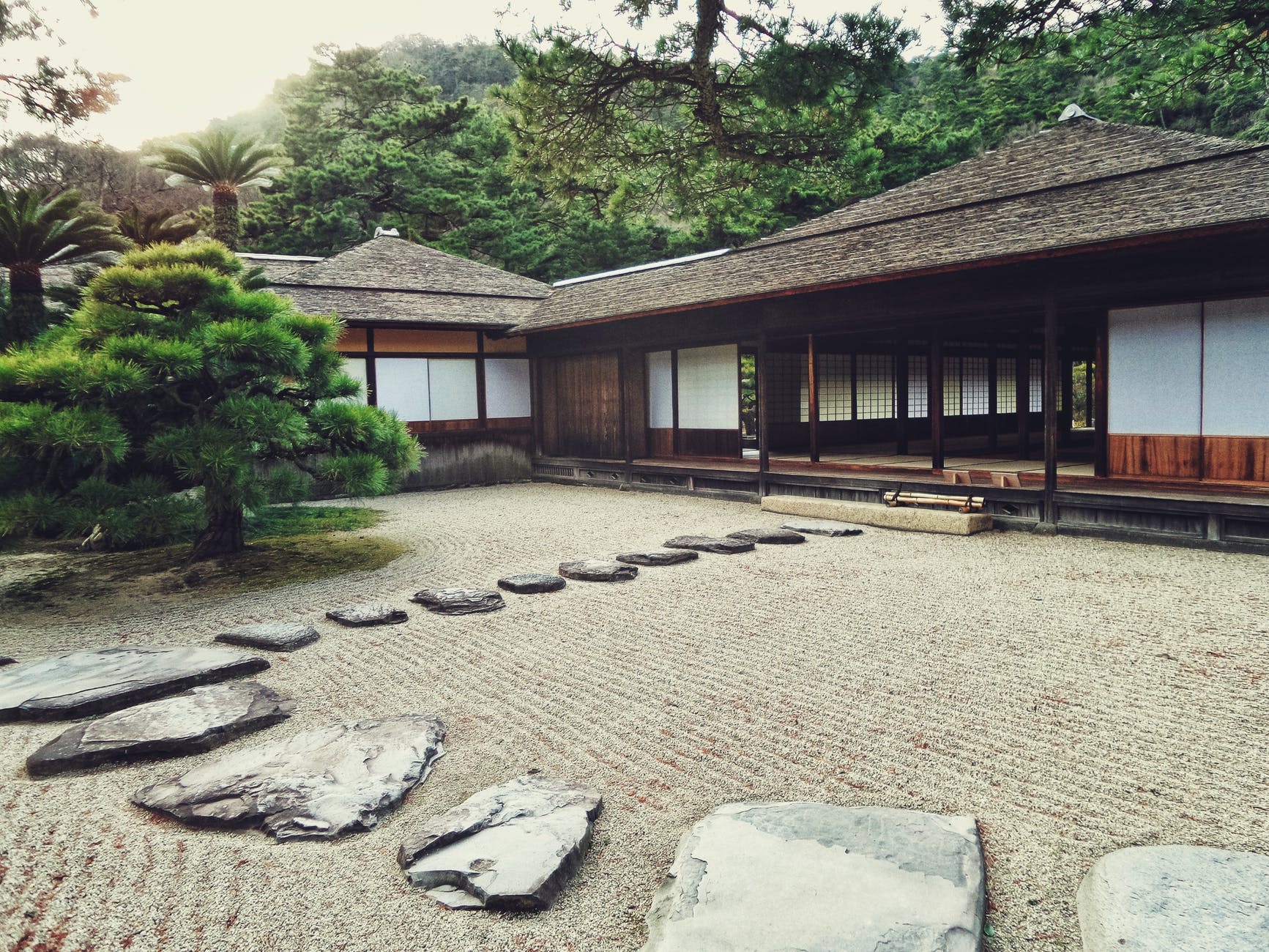
About a year after I arrived in Japan, I started going to a temple to do Zazen, or Zen meditation. It was held at 6:00am on Sundays. At that time, I didn’t have a car, so I rode my bicycle to the temple. It took about 30 minutes. Before we started meditation, we cleaned the Zen-do hall. There were five of us – the priest, three men, and me.

We did Zazen with the doors and windows open. It was nice and cool in summer, although I panicked when a bee or large insect came in through the doors. I tried not to disturb the other people, but I’m sure they could see me panic! In winter, it was so cold that my fingers and toes turned blue!

After Zazen, we went to a different room to copy the sutras. It was my first time to use a brush and ink to write. I’m sure my writing was very bad, but the others always said it was good. They were very kind. After copying the sutras, we drank matcha and listened to a lecture by the priest. This was 17 years ago, so at that time, my Japanese was not very good. I couldn’t understand much.

When we finished, one of the men took me to a room overlooking the temple garden, and we talked about many things. I enjoyed talking to him. He spoke slowly so I could understand him. He was the president of a large company in the area.

After Zazen, I went home, got changed, and went to work. I felt peaceful throughout the day. I can’t remember why I stopped going to the temple. Maybe I needed more time to study for my Japanese tests.

Last year, I went to Zazen classes at a local Buddhist centre. Every month, we had a lecture and then Zazen practice. I was pleased because I could understand the lectures. I was also happy because the Zazen practice was in a room, with an air conditioner and a heater. (I know, I shouldn’t think like this because endurance is part of the training. I need to practice more!) 🙂

[Easy English Blog]Writing stories

pen writing notes studying

Photo by Tookapic on Pexels.com

I enjoy writing stories. I started writing stories when I was a child. At school, in English class, we had to do creative writing. We had to write poetry, newspaper articles, and short fictional stories. This was my favourite class. I read many books when I was a child, so I enjoyed writing stories.

Now, I write graded readers. Sometimes, they are easy to write, and other times, they are difficult to write. I can usually get an idea quite quickly, but sometimes, turning the idea into a full story is difficult for me. So, I talk to other writers about my idea, and they often give me helpful suggestions. Then, I plan the story out from beginning to end, and sit at my computer and write the story.

If I have planned the story well, it is usually easy for me to write the story. If I haven’t planned the story well, it takes me a long time to write the story. Somtimes, I have to change my plan and change the story.

Some people don’t plan when they write. They just get an idea and start writing. The story “appears” to them as they write. I tried writing like that, but I couldn’t finish the story. I got stuck in the middle. So, I am the type of writer who needs a plan.

I have just finished writing a new graded reader. Now, it needs editing. I hope I can publish it this year. I am already thinking about the next graded reader. I have an idea for it, but the idea is vague (vague = not clear). Maybe I need to think about it for a while longer.


That’s unwise

Do you know the English word “unwise“? Read the conversation below. What does Jenny mean when she says “That’s unwise”?

Jean-Paul: I hate my job. I’m going to quit today!

Jenny: That’s unwise. You should find a new job before you quit.

Does she mean:

a) that’s a good idea

b) that’s clever

c) that’s foolish

d) that’s difficult

The answer is below!↓

business charts commerce computer

Photo by Pixabay on Pexels.com


Answer: c) that’s foolish

[Easy English Blog] Green tea

two round ceramic pots

Photo by rawpixel.com on Pexels.com

I love green tea (matcha). When I first came to Japan, I didn’t like it. But over the years, I have grown to love it. I have a matcha bowl and a tea whisk in my house, so I can make my own tea. Of course, the tea I make tastes completely different from the tea we can drink at tea ceremonies. The area of Japan where I live is famous for green tea and Japanese sweets, so I have taken part (taken part = participated) in tea ceremonies many times.

I remember when I first came to Japan, and I saw an ice cream vending machine. At that time, I couldn’t read Japanese, and I wanted a mint ice cream. So I selected the green-coloured one. It was green tea! I was so disappointed and I threw it away! But now, I love green tea ice cream. If I have a choice between green tea and other flavours, I usually choose green tea.

When I don’t have time to prepare matcha, I use teabags. My favourite is Oi Ocha. There is a haiku poem on every teabag packet. I enjoy reading the haiku while I’m waiting for the kettle to boil.

Writing about green tea makes me want to drink it! I’m going to make myself a cup now. 🙂

[Easy English Blog]Writing poetry

fire and ice by robert frost

Photo by Ayat Zaheer on Pexels.com

I love poetry. I enjoy reading and writing it. One of my favourite poets is Rainer Maria Rilke. I can’t read German (although I studied it at school), so I have to read translations of his poetry. The translations are beautiful, so I can imagine that the original German is also beautiful.

I also like Japanese poetry, especially haiku and tanka. I have a book about how to write haiku in Japanese. It has a list of seasonal words in it. I learned a lot of Japanese vocabulary from the book, and I read many examples of Japanese haiku. I have tried to write my own, but they are not very good. When I read them to my Japanese friends, their reaction is usually “Hmm….”

So, I write more poetry in English than I do in Japanese. I sometimes write haiku in English, and I sometimes write traditional English poetry, but I prefer to write freely. I pick up ideas for poems everywhere. Sometimes, my poems come from a line in a song, or a conversation, or from a scene. Somtimes, the poem just appears in my head!

I sent some of my poems to poetry journals a few years ago. Unfortunately, the journals didn’t want my poems! They weren’t good enough. 😦

I guess I have to practice and study more.