Stumble upon (something)

Do you know the English expression “to stumble upon (something)“? Read the conversation below. Can you guess the meaning?

Nadim: How was your trip to the countryside?

Paul: It was great. We stumbled upon an old church.

Does it mean:

a) find something by accident

b) fall over something

c) visit somewhere

d) have an accident

The answer is below!↓

white and brown house

Photo by Arvid Knutsen on Pexels.com


Answer: a) find something by accident

Keep (someone) company

Do you know the English expression “to keep (someone) company“? Read the conversation below. Can you guess the meaning?

Linda: What are you going to do on Sunday?

Nelly: I’m going to keep my mother company. She’s not been feeling very well lately.

Does it mean:

a) take someone to a company

b) help someone at their company

c) spend time with someone so they are not lonely

d) take someone to hospital

The answer is below!↓

ask blackboard chalk board chalkboard

Photo by Pixabay on Pexels.com


Answer: c) spend time with someone so they are not lonely

Catch some rays

Do you know the English expression “catch some rays“? Read the conversation below. Can you guess the meaning?

Bob: What are you going to do this weekend?

Terry: The weather is going to be nice, so I’ll catch some rays.

Does it mean:

a) relax in the sun

b) go fishing

c) have a party outside

d) go surfing

The answer is below!↓

white beads on question mark sign

Photo by Anna Shvets on Pexels.com


Answer: a) relax in the sun

[Easy English Blog] Too many feijoas

Today’s Easy English Blog is from Patricia in New Zealand!

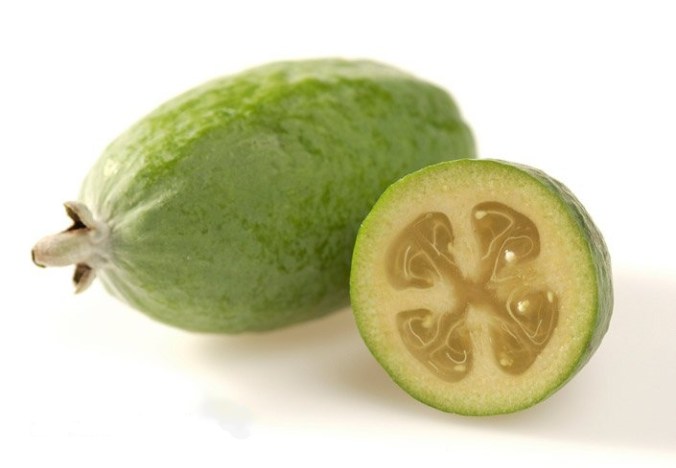
Do you know what feijoas are? Another name for feijoa is ‘pineapple guava’.

Feijoas are a fruit. They come from South America.  In about 1900 they were grown in California and then about 100 years ago people started growing them in NZ.

They grow well in most parts of NZ. There are many feijoa trees in gardens in NZ. I have two. They are very pretty –I like the leaves and the flowers. In April, the fruit is ready to eat.  It is an unusual fruit. It has a unique tatste. Some people love feijoas and some people think they taste very bad.

This year I had many feijoas on my trees. They are all ready to eat at the same time – there are too many for me to eat. I tried to give some away – but the people near my house didn’t want them! There were two reasons.

Some neighbours don’t like them. Some neighbours have their own feijoa trees so they have too many to eat  – they want to give some to me.

I don’t like to waste food so I have frozen a lot of fruit. They make great cakes,and muffins and my neighbour told me she has a good recipe for making feijoa ice cream. So I will have many sweet treats from my freezer later in the year.

[Easy English Blog] Teddy Bear Hunt

brown teddy bear on brown wooden bench outside

Photo by Pixabay on Pexels.com

Today’s Easy English Blog is from Patricia in New Zealand!

Coronavirus has changed our lives.   The government asked everyone to stay home.  The rules are very tough.

People can go to the supermarket or the pharmacy. They can take walks.  All the schools are closed. Young children are very bored. Their parents take them for walks but walking is very boring for small children.

Someone in England had a good idea.  There is a famous children’s book by a man called Michael Rosen. It’s called ‘We’re Going on a Bear Hunt’.

The idea is to put teddy bears in the windows of your house. When children are walking with their parents they can look for teddy bears and count them.

When I am walking I look at the windows of all the houses. In our neighbourhood many people have put teddy bears in the windows.

But I guess some people did not have teddy bears – so they have put other soft toys in their windows. I have seen Disney characters, Pokemon, My Little Pony, koalas, gorillas, toy dogs, pink cats……

Other people have pictures and messages in their windows.  Everyone is trying hard because life is difficult all over the world right now.

Do you have the teddy bear hunt in your neighbourhood?

Tie the knot

Do you know the English expression “to tie the knot“? Read the conversation below. Can you guess the meaning?

Isabelle: How are Peter and Maria? Are they still together?

Claire: Didn’t you hear? They tied the knot last Saturday.

Does it mean:

a) split up

b) get married

c) have an argument

d) start dating

The answer is below!↓

brown rope tangled and formed into heart shape on brown wooden rail

Photo by Pixabay on Pexels.com


Answer: b) get married

Stand on (one’s) own two feet

Do you know the English expression “to stand on (one’s) own two feet“? Read the conversation below. Can you guess the meaning?

Neil: Do you still give your son money?

Abby: No, he is working now. He has to stand on his own two feet.

Does it mean:

a) stand up

b) be independent

c) work hard

d) make a lot of money

The answer is below!↓

man looking at his cellphone while having coffee

Photo by Jack Sparrow on Pexels.com


Answer: b) be independent

Forty winks

Do you know the English expression “forty winks“? Read the conversation below. Can you guess the meaning?

Terry: What is George doing?

Michel: He’s having forty winks on the sofa.

Does it mean:

a) a nap

b) watch TV

c) play a game

d) argument

The answer is below!↓

white beads on question mark sign

Photo by Anna Shvets on Pexels.com


Answer: a) a nap

Give (one) the creeps

Do you know the English expression “to give (one) the creeps“? Read the conversation below. Can you guess the meaning?

Lisa: What do you think of new guy at work?

Helena: I don’t like him. He is always looking at me. He gives me the creeps.

Does it mean:

a) make (one) feel amused

b) make (one) feel angry

c) make (one) feel frightened

d) flatter someone

The answer is below!↓

woman in black blouse sitting in front of silver laptop

Photo by Polina Zimmerman on Pexels.com


Answer: c) make (one) feel frightened