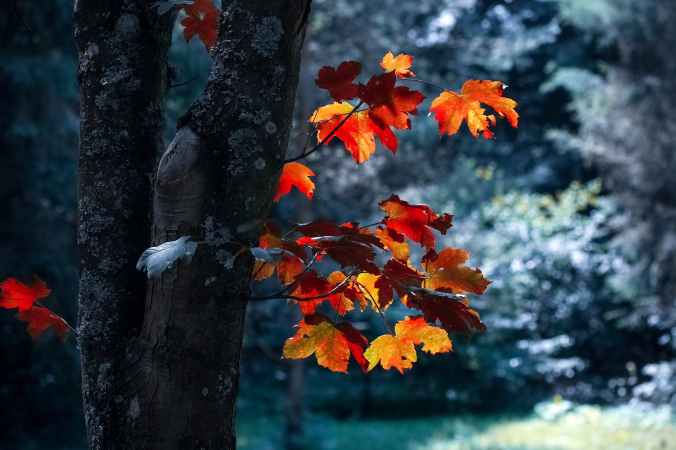
[Short Story] The life of a tree

flight landscape nature sky

Photo by Pixabay on Pexels.com

Simone’s house is very old. Her grandfather built the house when he was a young man. When the house was finished, Simone’s grandfather asked a girl from his village to marry him.

Simone’s father grew up in this house. Many years later, Simone came to live in this little old house.

Simone has a wonderful tree in her garden. It is a camellia. Her grandfather planted it. So it is more than 60 years old. Every year, at the end of winter, it is covered in beautiful pink flowers.

But one year, the weather is very bad. The wind is very strong. The old tree falls down. It is lying on the ground. Simone is very sad. She feels empty.

The camellia was a memory of my family, and now it is gone.

Simone is in the garden. She is looking at the dead tree. She is crying.

“Excuse me”.

Simone is surprised. There is an old man in her garden. She didn’t see him come into the garden.

“What! Who are you?”

“I was a friend of your father. I remember this house. I came here to play when I was a young boy. Why are you sad?”

Simone shows the old man the tree. “My grandfather planted this tree. And now it is dead.”

The old man laughs. “Dead? Why do you think this tree is dead?”

Simone thinks the old man is crazy. “It fell down! There will be no more flowers. It is only a memory.”

The old man smiles. “I am in this village to visit my grandson. I am tired. Can we sit down? Can you give me a cup of tea?”

“Oh, sorry. Of course. Please come into the house.”

“No. I like to be outside. Can you bring me a cup of tea here?”

Simone points to a table and chairs in the garden.

“Please sit there,” says Simone.

The old man sits down. Simone goes into the house and makes tea. She carries the tea out to the garden.

She gives the old man a cup of tea. Simone has a cup of tea too. They sit in the garden, but Simone is not happy. They can see the dead tree. She is very sad.

The old man drinks his tea. Then he asks, “What will you do with this tree?”

“I don’t know,” says Simone. “Maybe I will pay some men to take the dead tree away.”

“Oh,” says the old man. “What will the men do with the tree?”

“I don’t know,” says Simone.

The old man smiles.

“I think you should pay some men to come and cut the tree up into firewood.”

“But I don’t have a fireplace.”

“That’s OK. I’m sure you can find some people who need firewood. Maybe some people who have no money and are cold this winter. You should cut all the leaves and small branches up very small and put them on your garden. They will stop weeds from growing. In time they will break down and feed the earth. The earth gave you that tree, so you should give something back. And finally.” The old man stops talking.

“Finally?” asks Simone. “What is the last thing I should do?”

“The old man laughs. “Plant another tree of course!”

He stands up. “I must go now,” he says. “But remember. Nature is a circle. Trees grow and die. New trees grow. This is normal. You should be happy because your tree was beautiful, you have good memories.  And now this old dead tree will help you do some good in the world.”

Put (something) away

Do you know the English expression “to put (something) away?” Read the conversation below. Can you guess the meaning?

Harriet: Susie, the living room is a mess! Put your toys away!

Susie: OK, mum. I’ll put them away now.

Does it mean:

a) throw  away

b) put something in a different room

c) tidy up

d) make a mess

The answer is below!↓

depth of field photography of p l a y wooden letter decors on top of beige wooden surface

Photo by Skitterphoto on Pexels.com


Answer: c) tidy up

Stick it out

Do you know the English expression “to stick it out“? Read the conversation below. Can you guess the meaning?

Yuri: I heard you don’t like your new job. Why don’t you quit?

Cindy: Because it will be difficult to find a new one. I’ll just have to stick it out for a while longer until I can find something else.

Does it mean:

a) stick something outside

b) endure something

c) hate something

d) look for something

The answer is below!↓

business charts commerce computer

Photo by Pixabay on Pexels.com


Answer: b) endure something

Take in the sights

Do you know the English expression “to take in the sights“? Read the conversation below. Can you guess the meaning?

Barbara: So what are you going to do in Paris?

Ella: I’m going to take in the sights. There are so many places I want to see!

Does it mean:

a) go sightseeing

b) go inside famous buildings

c) take something somewhere

d) take photographs

The answer is below!↓

photo of eiffel tower

Photo by Eugene Dorosh on Pexels.com


Answer: a) go sightseeing


[Easy English Blog] Reading goals

brown book page

Photo by Wendy van Zyl on Pexels.com

I’ve been thinking about my goals for next year. One of them is to read more books. In particular, I would like to read more Japanese books.

Although I read Japanese every day in my job, and I read Japanese newspapers, I think I should read more. Especially fiction. I have only read three Japanese novels this year. When I read novels, I forget that I am reading, and I enter the world of the book. So when I read in Japanese, I don’t feel like I am studying. I am just absorbing the langauge and the language patterns as I participate in the fictional world.

I usually read books by Matsumoto Seicho, but next year, I’d like to try some different authors. I would like to read something by Naoya Shiga. I would also like to read more books by Yukio Mishima. I have only read two or three of his books, and I enjoyed them (although they were a little difficult). I think I should also read some contemporary novelists too.

Maybe I will start going to the library again. I haven’t been there for many years. It will be cheaper than the book shop!

I wonder, how many books can I read next year? I guess that will depend on how busy I am with work. But I will try to read one in English, then one in Japanese, then one in English, then one in Japanese… I wonder if I can do it?

Get out of (doing something)

Do you know the English expression “to get out of (doing something)“? Read the conversation below. Can you guess the meaning?

Joyce: How did you get out of cleaning the office yesterday?

Gary: I told the boss I had a bad back and couldn’t do anything physical.

Does it mean:

a) avoid (doing something)

b) stop (doing something)

c) try not to (do something)

d) tell someone to (do something)

The answer is below!↓

adult business computer contemporary

Photo by Marc Mueller on Pexels.com


Answer: a) avoid (doing something)

[Easy English Blog] Studying while driving

aerial photography of vehicle parked on beach near bushes

Photo by The Lazy Artist Gallery on Pexels.com

I don’t think studying a language while driving is a good idea. I am learning Russian, but I don’t have so much time to study every day. So, I decided to use my driving time to study. I have started listening to the CDs from my textbook while I am driving.

Usually, I listen to English music CDs or Japanese radio while I am driving. I understand both languages, so it doesn’t cause any problems.

However…when I listen to my Russian CDs, I start thinking things like:

“What did she just say?”

“Is that how you pronounce XXX? I’ve been pronouncing it wrong.”

“I didn’t catch that. I must listen to it again.”

“Ah! That conversation was the one on page 10 of my texbook!”

“Oh! That sounds different from what I expected!”

And so on….

This is not good. It takes my attention away from the road. I think I will stop studying while driving, for everyone’s safety!

Count on (someone)

Do you know the English expression “to count on (someone)“? Read the coversation below. Can you guess the meaning?

Tracey: I need someone to help me with my taxes.

Robert: Ask Tim. He’s good at that. You can count on him.

Does it mean:

a) count something for someone

b) count something on someone

c) depend on someone

d) ask someone

The answer is below!↓

photo of person holding pen

Photo by Acharaporn Kamornboonyarush on Pexels.com


Answer: c) depend on someone

[Easy English Blog] Already October

autumn autumn leaves blur close up

Photo by Vali S. on Pexels.com

It’s already October. This year has flown by (= passed very quickly). In January and February we had very heavy snow. I remember that clearly. Every day I had to dig my car out from under the snow. Then, in March, I went to Tokyo. That doesn’t seem like it was seven months ago. It seems like it was only two or three months ago. Maybe that’s because I have been very busy this year. Time seems to pass more quickly when we are busy.

The summer didn’t pass quickly though. We had a very hot summer, and it seemed to last forever! I thought it would never end! August was a particularly long month. But of course, it passed, and now it is October, and the days are much cooler.

It will soon be Christmas. Then, the end of the year. And then a new year will begin. As I get older, I feel like time is speeding up. Christmas and New Year seem to come around very quickly. At the end of every year, I make a plan of all the goals I want to achieve in the next year. I am going to start thinking about my goals for 2019. I am going to start now, because the end of year will come around quickly. I want to be ready!

Apply for (something)

Do you know the English expression “to apply for (something)“? Read the conversation below. Can you guess the meaning?

Will: Have you applied for a bank loan yet?

Liam: No, I’m going to apply for it next month.

Does it mean:

a) attach something

b) put something on something

c) formally request something

d) pay back something

The answer is below!↓

working business money coins

Photo by Negative Space on Pexels.com


Answer: c) formally request something