A leopard cannot…

Can you complete this English saying?

A leopard cannot…

a) run slowly

b) change its spots

c) hide its spots

The answer is below! ↓

leopard-looking


Answer: (b)

A leopard cannot change its spots.

Meaning: A person cannot change his or her innate character/personality.


to get a grip

annoyed-woman

to get a grip (to control one’s emotions)

E.g. 1:

A: I feel so upset and angry! I don’t know what to do!

B: Get a grip! Your problem isn’t that bad!

E.g. 2:

A: Kelly is still upset about losing her job.

B: I know. She really needs to get a grip. She will never find another job if she is so upset all the time.

[Easy English Blog] Chocolate from home

When you live in another country, you often miss things from home.

Of course, I miss my family and friends. But I also miss things like the Sunday newspapers, some TV programmes, long summer evenings…and chocolate. Especially chocolate!

DSC05138

My family knows that I miss chocolate, so they send me some every Easter. The other day, the postman came to deliver a big parcel of chocolate from my sister.

Of course, I didn’t wait until Easter to eat it. That would mean waiting two weeks!

DSC05139

What would you miss from your home country if you lived somewhere else?


(H)

[Easy English Blog] Hamburgers

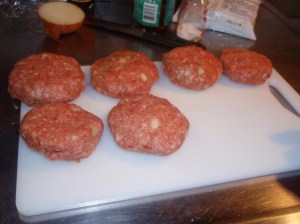
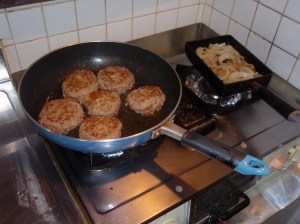
Hamburgers are heaven. I cook them often. I’ve experimented over the years and think I created a combination that works in this house.  It’s important that the hamburger meat is not too fatty. Otherwise you have a layer pool of fat left in the frying pan. Of course, cooking them on the BBQ is great but where I live that’s a summer option only.

hb1

I used to have trouble because the beef I can buy doesn’t have much taste. I have found a way to improve the taste – add chili!

I put Worcester sauce and chili paste in my hamburger mix. About a teaspoonful of chili paste for each 400g (pound) of hamburger meat seems about right. The burgers don’t have a spicy taste, but the chili paste seems to make them taste more like beef. I don’t like chili powder so I use either Indonesian or Chinese chili paste. It’s easy to find in jars at the supermarket.

hb2

Of course what you eat with your hamburgers is important too. In my house a hamburger dinner means putting tomato ketchup, mayonnaise, mustard, shredded lettuce and fried onions on the table.

What do you like on your hamburgers?

(P)

[Easy English Blog] The Year of the Snake

This year is the “Year of the Snake”. Here in Japan, many shops sell snake ornaments and lucky charms.

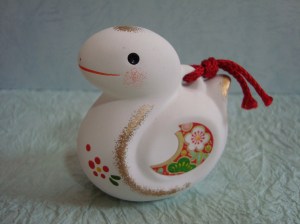
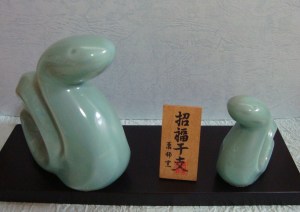
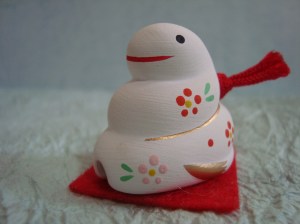
I have many snake ornaments in my house. Here are some photographs of my snakes!

DSC05130

My friend bought me the two snakes below in 2001, the last snake year.

DSC05128

A happy snake!

DSC05133

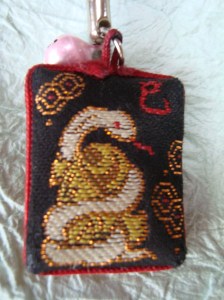
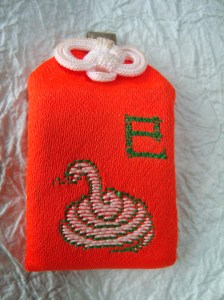
Also, many temples sell lucky charms with the twelve animals of the zodiac printed on them. Some of the lucky charms are keyrings or mobile phone straps. Here are some lucky snake charms which I bought at local temples.

DSC05134

In some cultures, especially in Asia, the snake is lucky, or it symbolizes positive characteristics. In other cultures, the snake has a negative image. In English, there is a phrase which shows this negative image.

DSC05135

The phrase is “a snake in the grass“. In English, a snake in the grass is a person who cannot be trusted. For example: “You should not trust Bill. He is a snake in the grass.”

DSC05136

How about you? Does the snake have a positive or negative image in your culture?

(H)

[Easy English Blog] Books and movies

book

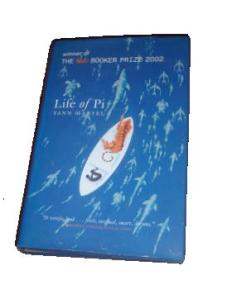
A few years ago, I read the book called Life of Pi . A friend gave it to me. I don’t think I would have bought it for myself. A book about a boy on a boat with a tiger, would have seemed rather strange. However, when I read it, I enjoyed it very much.

Have you read the book? The story is told by Pi, the hero. When he was still a teenager, his father had a zoo in Pondicherry, India.  His father decided to move to Canada. He sold the animals from the zoo to different countries. When Pi and his family, leave India, they travel on the same ship as some of the animals from the zoo. The boat sinks and Pi escapes on a small lifeboat with a hyena, a zebra and an orangutan. Later Pi discovers that there is also a tiger hiding on the lifeboat.  It’s a very interesting story. I won’t tell you any more because you might want to read it.

Then in 2012, the famous movie director Ang Lee, made a movie from the story. It did very well in the American Academy awards. Ang Lee won the Oscar for best director and the movie also got the top prizes for cinematography, visual effects and music. I think it must be a very beautiful movie, but I don’t know if I want to see it. Sometimes when you like a book very much, the movie version of the story is disappointing.

I think there are two reasons. One reason is because we enjoy some parts of a book, more than others. Then, when they make the movie, they have to cut many parts of the book out. If they leave out our favourite bits – we feel disappointed.

Another reason is because we create an image in our minds of what different characters look like. If the actor or actress doesn’t match our image, the movie doesn’t seem so good. I remember thinking that Cate Blanchett didn’t look like Galadriel in the Lord of the Rings movies.  Of course, she is very beautiful, but my image of the Queen of the Elves was different.

Have you seen a movie based on a book, after you have read the book?

What did you think? Did you think the actors and actresses matched your mental images of their characters?

(P)

[Easy English Blog] Umami

umami

I learned a new word in Japan – umami.  This is the fifth taste. So the taste list should be sweet, sour, salty, bitter or umami. When I learnt this word, I thought it wasn’t used very much. But when I Googled ‘umami’, it got almost 7.5million hits!

Umami is defined in English as a pleasant savoury taste. It is different from salty. A lot of daily Japanese foods contain high umami ingredients – like dashi (Japanese soup stock). Dashi is made from kombu seaweed and dried bonito flakes. Both if these ingredients have high umami.

It seems that the best chefs have always understood umami, even if they didn’t know what it was. These chefs knew that if you put certain food combinations  together, the result was very tasty. So that’s umami, which can be translated as “delicious taste”.

Drinking tea in Japan can be an experience for all the senses.

tea

When we drink Japanese green tea we are supposed to use our five senses:

Look at the colour of the tea and the tea bowl.

Listen to the sound of the water being poured.

Smell the aroma of the tea.

Touch – enjoy the texture of the tea bowl.

And taste – no surprise that correctly brewed green tea is umami!

(P)