
This is a short English grammar quiz. The pass mark is 80%. Good luck!
Start Quiz
We would like to wish everyone a happy new year, and to thank all the learners and teachers of English who bought our graded readers over the year. We hope you enjoyed reading them as much as we enjoyed writing them!
Autumn is a busy time of year for us, but it is also our favourite here in Japan! Here are some photographs we took recently. We hope you enjoy them!
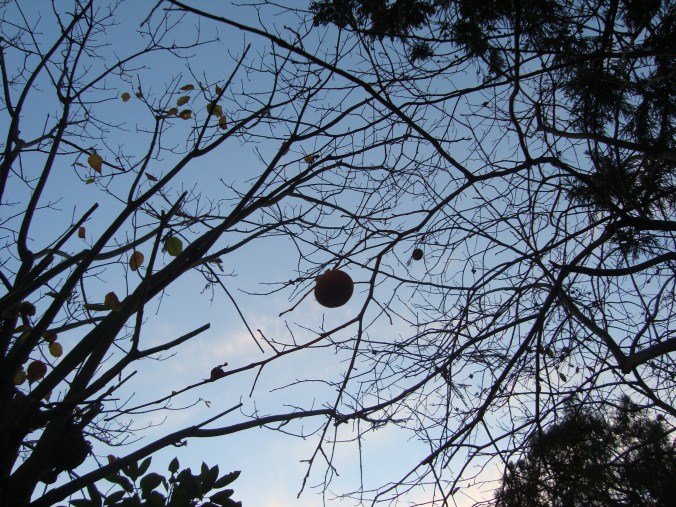
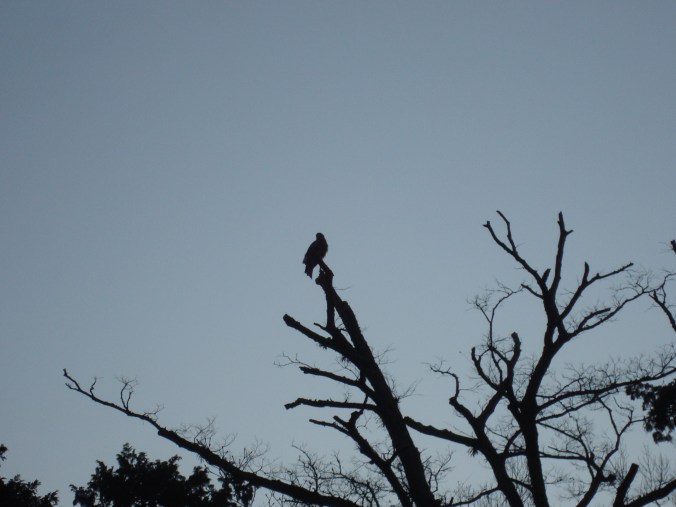


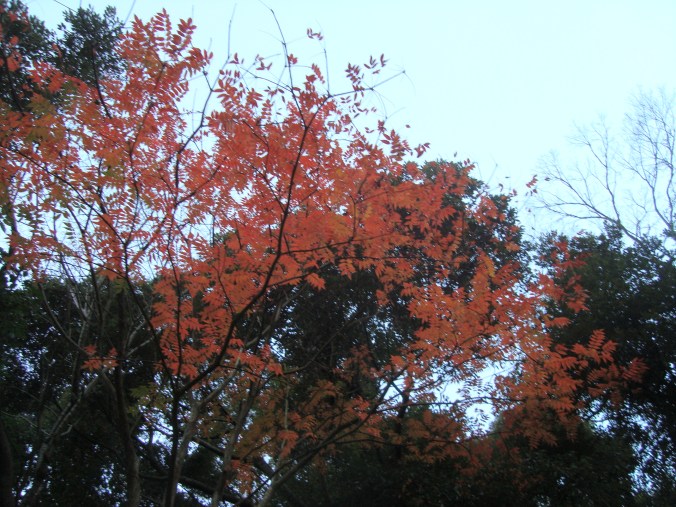

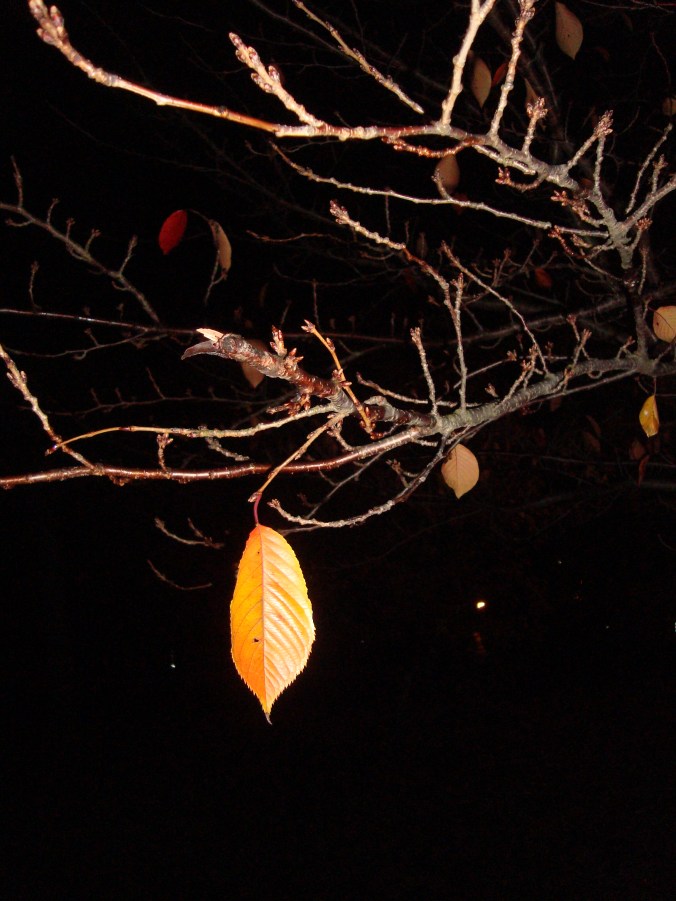

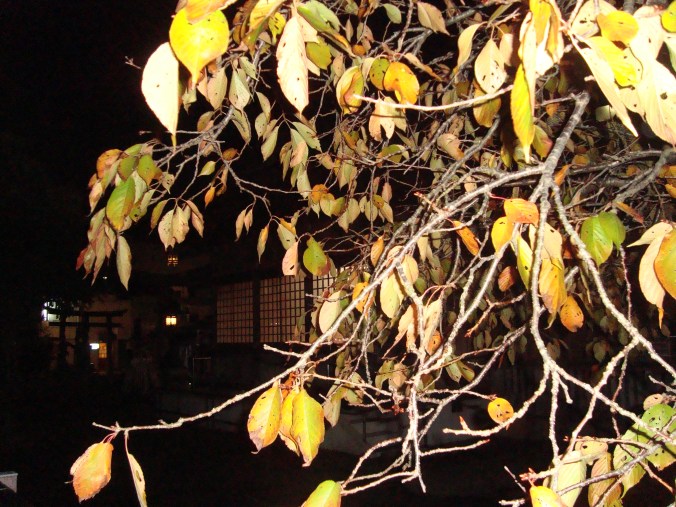
Our last blog post was from Japan. It was about autumn. In Japan, the leaves on the trees are starting to turn red, and the days and nights are getting cooler. It is a beautiful time to visit!
But it is the beginning of spring here in the southern hemisphere.
Next to my computer I have a small vase of flowers – freesias and grape hyacinths. The freesias smell wonderful!
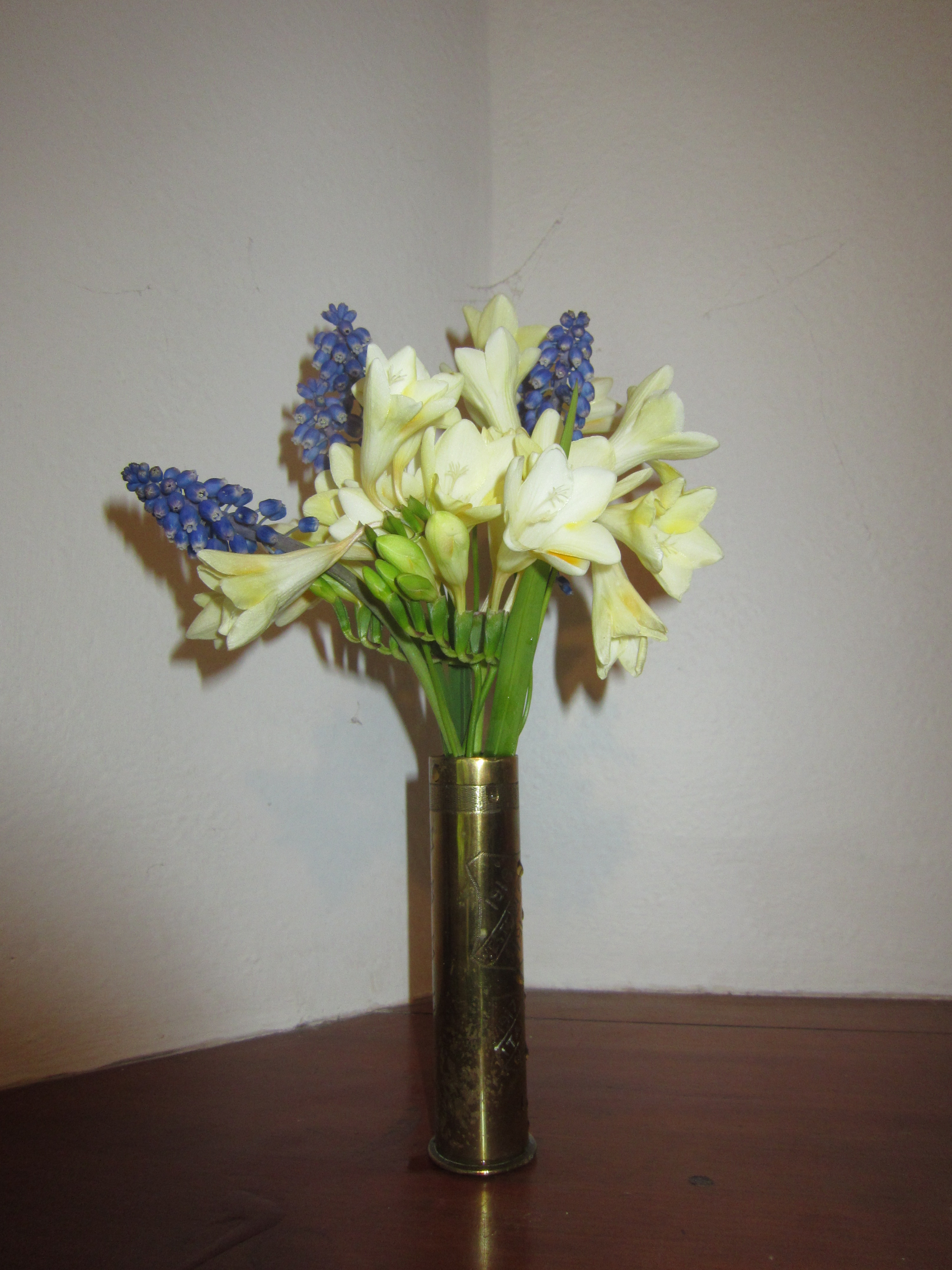
But…look closely at the picture! Can you see the spider’s web on the wall above the flowers!? It is time for spring cleaning!!
What is spring cleaning?
In many countries, it means cleaning the house from top to bottom as soon as the weather gets warmer in spring.
In Iran, the ‘new year’ begins on the first day of spring. So it is important to clean everything just before the new year starts.
In America it is a good time to clean the house, because it is too early for all the bugs but it is warm enough to open all the doors and windows.
I am thinking about spring cleaning because my house is old and it has small windows.
In winter, the house is dark, but in spring the sun comes into the house. Then I can see that the windows are dirty and there is a lot of dust in my house! Time for spring cleaning!
But maybe not today. Today maybe I will just enjoy my flowers, (and the spider’s web)!
What season is it where you are?
Is it the start of fall?

Whenever I think of the start of autumn I think of this poem by Emily Dickinson.
The morns are meeker than they were –
BY EMILY DICKINSON
The morns are meeker than they were –
The nuts are getting brown –
The berry’s cheek is plumper –
The rose is out of town.
The maple wears a gayer scarf –
The field a scarlet gown –
Lest I sh’d be old-fashioned
I’ll put a trinket on.
Maybe it seems difficult to understand, but we can talk about that.
It is the beginning of autumn. So the days are shorter. The mornings are “meeker”.
“Meek” means quiet and respectful.
So she is writing that the sun comes up later and the days are shorter.
It is fall, so the nuts and berries are almost ready for eating.
Roses bloom in spring and summer. It is fall now, so there are no roses.
But the leaves of the maple trees are changing colour and other trees and plants already have red leaves.
So Emily Dickinson thinks that she must be smarter or more colourful.
So she says she will put a trinket (accessory) on. This might be a brooch or a necklace.
Poems like this are fun to read aloud. Why don’t you try it?
In this category there are two quizzes for the I Talk You Talk Press graded reader Danger in Seattle.
1. True/False Quiz
2. Comprehension Quiz
This is a quiz about the I Talk You Talk Press graded reader Danger in Seattle.
The pass mark is 80%. Click the button below to start the quiz. Good luck!
Start Quiz
This is a quiz about the I Talk You Talk Press graded reader Danger in Seattle.
The pass mark is 80%.
Click the button below to start the quiz.
Start QuizThis page has information about the stories and places in the I Talk You Talk Press graded reader Old Jack’s Ghost Stories from Japan.

Old Jack once met a man who told him about the wonderful ghost stories of Japan. Long ago, a famous writer called Lafcadio Hearn heard these stories and wrote about some of them. Old Jack was very interested, and travelled to Japan to learn about Lafcadio Hearn and Japanese ghosts.

(Photo: Frederick Gutekunst [Public domain], via Wikimedia Commons)
Lafcadio Hearn was born in Greece in 1850. His mother was Greek and his father was Irish. He spent his childhood in Ireland, England and France. Then he went to the USA and became a newspaper reporter and writer.He travelled to Japan, and found a job teaching English in the charming city of Matsue.
Hearn married the daughter of a samurai, and they had four children. He also lived in Kumamoto, Kobe and Tokyo. He became Japanese, and spent the rest of his life in Japan. He died in 1904.
Lafcadio Hearn is very famous, because when he wrote his books about Japan, people in English speaking countries did not know very much about this interesting country. By reading Hearn’s books they came to understand a little about Japanese life and culture.
As you read this book, you will travel around the modern but mysterious country of Japan with Old Jack, and share his adventures.
Old Jack’s adventure started in Matsue. This city is in Shimane Prefecture on the Sea of Japan coast. It is a beautiful, traditional city. It has a castle, and a large lake called Shinji-ko. Lafcadio Hearn lived in Matsue for 15 months. Now, his house is a sightseeing spot. There is a Lafcadio Hearn museum near to his house too. The museum contains many of Hearn’s items.

(Photo: By 663highland (663highland) [GFDL (http://www.gnu.org/copyleft/fdl.html), CC-BY-SA-3.0 (http://creativecommons.org/licenses/by-sa/3.0/) or CC BY 2.5 (http://creativecommons.org/licenses/by/2.5)%5D, via Wikimedia Commons)
Old Jack’s first story “A Mother’s Love” is Lafcadio Hearn’s “The Woman Who Bought Syrup”. This story is from Hearn’s book, Glimpses of Unfamiliar Japan. The setting for the story is Daio-ji Temple in Matsue. This temple is in a quiet area of the city, not far from the Lake Shinji hot spring area, and it attracts many tourists interested in Hearn’s story.
Old Jack’s second story, “The Laughing Samurai” is also from Glimpses of Unfamiliar Japan. The setting for this story is around another temple in Matsue. Fumon-in Temple is near Matsue Castle. The temple was built over 400 years ago. It has a traditional teahouse and Japanese garden. The bridge in the ghost story has gone, so the ghost does not appear any more, but even today, some people say they can sense a ghost when they pass near the temple.
Then we travel with Old Jack to Shimonoseki in Yamaguchi Prefecture. It is a port city at the southern part of the main island, Honshu. A bridge and a tunnel connect the city to the island of Kyushu. Shimonoseki is famous for the battle of Dan-no-ura, between the Heike and the Genji families.

(Photo: http://commons.wikimedia.org/wiki/File%3AShimonoseki-city.jpg)
While he is in Shimonoseki, Old Jack hears another story, “The Blind Man Who Could See”. This is Hearn’s The Story of Mimi-Nashi-Hoichi from Kwaidan, Stories and Studies of Strange Things, one of Hearn’s most famous books. The temple in the story, Amida-ji, is now a shrine called Akama-jingu. It is dedicated to the child emperor Antoku, who died in the Battle of Dan-no-ura, when he was just eight years old. There is a statue of Hoichi the Earless in the shrine grounds.

(Photo: By nnh (photo by nnh) [Public domain], via Wikimedia Commons)
The story “The Woman of the Snow” is Hearn’s story Yuki-Onna. This story is also from Kwaidan, Stories and Studies of Strange Things. The events take place in Musashi Province. This old province was the largest in the Kanto area. The province does not exist anymore. Today, the area is Tokyo and Saitama. The capital of the province is the present-day Fuchu City.

(Picture: By Sawaki Suushi (佐脇嵩之) (scanned from ISBN 4-3360-4187-3.) [Public domain], via Wikimedia Commons)
Yuki-Onna is a popular Japanese ghost. She often appears in Japanese manga and animation. There are many stories about her in Japan, but Lafcadio Hearn’s story is the most famous. Hearn said that he heard the story directly from a farmer in Musashi Province.
“Secrets of the Heart” is Hearn’s A Dead Secret. This story is also from Kwaidan, Stories and Studies of Strange Things. The story is set in Tamba Province. This old province is now the Kyoto area. The old capital of the province is the present-day city of Kameoka.
Today, Kyoto is a very popular tourist spot. It is a fascinating city, with many temples and historical sites.

(Photo: By Moja (Photo by Moja) [GFDL (http://www.gnu.org/copyleft/fdl.html), CC-BY-SA-3.0 (http://creativecommons.org/licenses/by-sa/3.0/) or CC BY-SA 2.1 jp (http://creativecommons.org/licenses/by-sa/2.1/jp/deed.en)%5D, via Wikimedia Commons)
The last story, “The Little Brothers” is Hearn’s story The Futon. It is from Glimpses of Unfamiliar Japan. It is one of Hearn’s sadder stories. It is set in Tottori City. This city is about two hour’s drive from Matsue. It is on the Sea of Japan coast. Tottori’s most famous spot is its sand dunes. The sand dunes are part of the Sanin Kaigan Geopark. Hearn’s story takes place in winter, when the city is covered with snow.

(Photo: By Hashi photo (Hashi photo) [GFDL (http://www.gnu.org/copyleft/fdl.html) or CC BY-SA 3.0 (http://creativecommons.org/licenses/by-sa/3.0)%5D, via Wikimedia Commons)
For more information about Lafcadio Hearn, see here. http://en.wikipedia.org/wiki/Lafcadio_Hearn
For more information about Japan, see here. http://www.jnto.go.jp/eng/

In this category there are two quizzes for the I Talk You Talk Press graded reader The Perfect Wedding.
1. True/False Quiz
2. Comprehension Quiz
 I Talk You Talk Press EXTRA
You must be logged in to post a comment.