[Easy English Blog] Rice Harvest in Early Autumn

Autumn is my favourite season.  After the long, hot and humid summer, the air starts to get cooler and the leaves on the trees start  to change colour. The sky is clear and we have nice sunny days to enjoy before winter comes. It is a beautiful time of year.
DSC05513

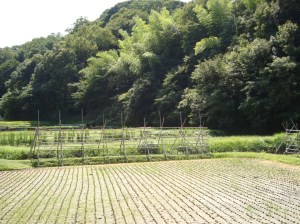
Rural Japan in autumn is beautiful. The rice harvest starts, and all around the countryside you can see freshly harvested rice drying on bamboo racks.
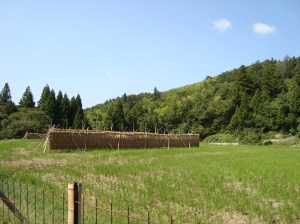
DSC05514

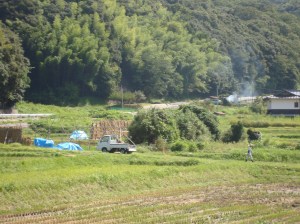
After the harvest, the smell of burning straw lingers on (linger on = stay) around the villages and hills. For me, it is “the smell of autumn”.

It was nice the other day, so I drove out to the countryside. I took some photos of the rice, drying in the sun. For a short while, I watched a farmer working in his rice paddy (rice field). It looked like very hard work. He was an old man. I wondered how long his family had been growing rice on that land. Maybe for hundreds of years?
DSC05483

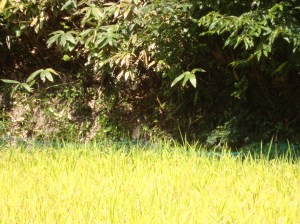
I think rice farming is a very tough job. Going to the countryside at harvest time reminds us that when we eat rice, we should be thankful.
DSC05529

DSC05526

DSC05528

DSC05516

This is where the rice often ends up! 🙂 (Itadakimasu!)

SANYO DIGITAL CAMERA

Curry and Rice picture by jetalone (Flickr) [CC-BY-2.0 (http://creativecommons.org/licenses/by/2.0)%5D, via Wikimedia Commons

English Quiz – Musical Instrument Vocabulary

old-piano

How is your “musical instrument” vocabulary”? Take our short quiz to find out!

The pass mark is 80%. Good luck!

Click the button below to start the quiz.

Start Quiz

[Easy English Blog] Simple and Convenient

DSC05509

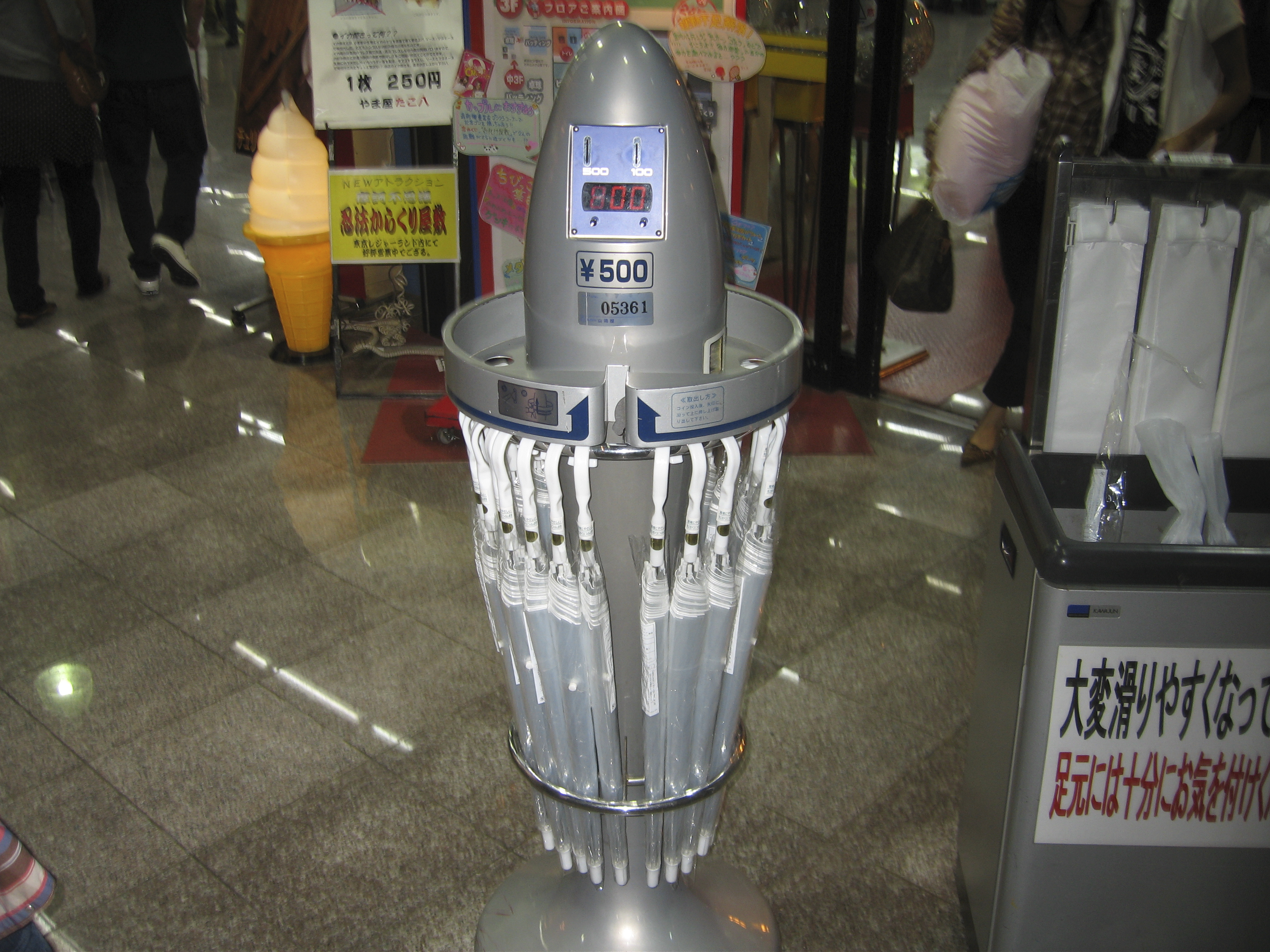
Do you know the English name for the machine in the photo?

It is a “vending machine“.

Here in Japan, vending machines are ubiquitous ( = very common/existing everywhere).

It is said that Japan has more vending machines than any other country.

They are called jido hanbaiki.  自動(jido = automatic) 販売 (hanbai = vending) 機 (ki =machine).


Today, I went for a drive. I went up into the mountains. At the top of the mountain, there were no cars and no people.

But…that’s right….there was a vending machine! I was very glad to see the machine because I needed a drink! 🙂


450px-Japan_cigarette_vending_machine


(By Terence Ong (Own work) [GFDL (http://www.gnu.org/copyleft/fdl.html), CC-BY-SA-3.0 (http://creativecommons.org/licenses/by-sa/3.0/) or CC-BY-2.5 (http://creativecommons.org/licenses/by/2.5)%5D, via Wikimedia Commons)

Many years ago, we could buy beer and cigarettes from vending machines very easily.

A few years ago, a new system was introduced to stop young children and teenagers buying beer and cigarettes.

Now, if you want to use these machines, you need an ID card to prove your age.

450px-Beer_vending_machine_in_Hokkaido,_Japan

(By Mr Wabu (http://flickr.com/photos/oxborrow/81522125/) [CC-BY-SA-2.0 (http://creativecommons.org/licenses/by-sa/2.0)%5D, via Wikimedia Commons)

Some people don’t like vending machines.

They say that they don’t look nice in the countryside. Other people say they use too much electricity.

I like them. I think they are simple and convenient. If you are out and very far from any shops, no problem! There is probably a vending machine on the next corner! 🙂

Forgot your umbrella and it has started to rain? No problem! There’s a vending machine for you too!

800px-Umbrella_vending

(By Jason Ruck (Transferred by Cloudbound/Originally uploaded by Jason7825) (I took it. (Originally uploaded on en.wikipedia)) [GFDL (http://www.gnu.org/copyleft/fdl.html), CC-BY-SA-3.0 (http://creativecommons.org/licenses/by-sa/3.0/) or CC-BY-SA-2.5-2.0-1.0 (http://creativecommons.org/licenses/by-sa/2.5-2.0-1.0)%5D, via Wikimedia Commons)


[Easy English Blog] Do you know this animal?

Tanuki_0161

Do you know the animal in the photograph?

It is a “tanuki”.

“Tanuki” is a Japanese word. It means “racoon dog”.

In rural Japan, tanuki are quite common. We can sometimes see them in the garden at night.  They move very quickly!

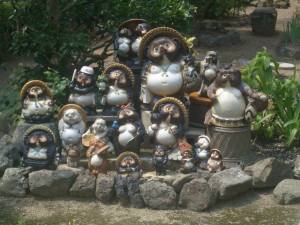
The statues in the photo below are also “tanuki’. These statues are very common in Japan!

Tanuki


Many houses, shops  and restaurants have these statues in front of their house.

In Japanese folklore, it is said that “tanuki” have magic powers.  They have a happy, mischievous image and many people think they bring good fortune.

Would you like to find out more about Japanese “tanuki”? Take a look here!

Bad books? Good books?

Do you know the English phrases “to be in someone’s bad books” and “to be in someone’s good books“?

Can you guess what they mean?

Question 1.

“Harry is in his teacher’s bad books because he didn’t do his homework” means

a) Harry’s teacher is angry with him

b) Harry’s teacher is pleased with him

c) Harry’s teacher wrote his name in a book with a list of bad children

Question 2.

“Wendy is in her teacher’s good books because she got 100% on the test” means

a) Wendy’s teacher is pleased with her

b) Wendy’s teacher is angry with her

c) Wendy’s teacher wrote her name in a book with a list of good children

The answers are below! ↓

love-of-books

Answers: 1. a) and 2. a)

Harry is in his teacher’s bad books means Harry’s teacher is angry with him.

Wendy is in her teacher’s good books means Wendy’s teacher is pleased with her.

Have you been in anyone’s good books or bad books recently?

to hang on

Do you know the English phrase “to hang on“?

Look at these examples. Can you guess what it means?

Eg 1

A: Come on! We’re going to be late!

B: Hang on a minute. I can’t find my keys!

Eg 2

A: Can you help me tidy the room?

B: Yeah, hang on. I’m just going to the bathroom. I’ll be right back.


“to hang on” means:

a) to wait

b) to go away

c) to be quiet


The answer is below ↓


time-on-my-hands-1346441675IZv


Answer: a) to wait.