[Short Story] Some days you just get lucky

pen writing notes studying

Photo by Tookapic on Pexels.com

William is sitting in a classroom. His desk is next to the window. On the desk is an exam paper. It is upside down. The back of the paper has nothing on it. In about 15 minutes, the woman in charge of the exam will say, “Please turn over the exam book. You can begin the exam now.”

William is very tired. He studied all night. This exam is very important. If he can pass the exam he will be able to get a better job.  

I hope I can pass this exam, he thinks. The boss said he would promote me to assistant manager, but only if I pass this course. But I am so sleepy.

The sun is coming in through the window. It is very hot. William’s eyes close. His head goes forward onto the desk. William is asleep.

He wakes up suddenly. A bell is ringing. He shakes his head and sits up. What!

The woman in charge of the exam is speaking.

“Time is up. Please put down your pens and pencils. Do not touch the exam papers. We will collect them now.”

Seconds later, one of the woman’s assistants picks up the exam paper from in front of William.

“Stop! Stop!” William is shouting. The assistant looks at him but doesn’t say anything. She moves away and picks up the next exam paper.

Oh, no! I slept all the time. I studied so hard but I didn’t take the exam. My boss will see my score is zero. I will never get a better job. I might lose the job I have now!

William puts his head in his hands. The other students on the course are standing up. They are packing their bags and walking out. William doesn’t move. Finally, he looks up. He is the only student left. The woman and her assistants are putting the exam papers into boxes.

Then, an alarm rings and an announcement comes over the loudspeaker system. “Emergency! Emergency! There is a fire!  Leave now. Everybody, leave the building now!”

The woman and her assistants run to the door. William follows them. They hurry down the stairs and out onto the street. The fire is very small. It is on the other side of the building. The fire department arrives soon, and puts the fire out. The danger is over. Everything is fine.

William doesn’t have his bag. He left it in the classroom. He has to wait until he is allowed to go back inside. He is standing next to the woman in charge of the exam. “What happens now?” he asks. “Are you waiting to go back and get the exam papers?”

“Yes,” she says. “But there is no hurry.”

“Why not?” asks William.

“Well, we left the exam papers in the room. That is against the rules. I’m very sorry but all the students will have to take another exam. Maybe next week.”

She smiles at him. “I saw you sleeping. Maybe next time you will stay awake!”

Lose sleep over (something)

Do you know the English expression “to lose sleep over (something)“? Read the conversation below. Can you guess the meaning?

Tanya: I get my blood test results next week.

Eve: Are you worried?

Tanya: A little, but I’m not losing sleep over it.

Does it mean:

a) to not sleep

b) to worry about something so much you can’t sleep

c) to stay awake

d) to worry about something so much you feel sleepy

The answer is below!↓

animal cat face close up feline

Photo by Pixabay on Pexels.com


Answer: b) to worry about something so much you can’t sleep

Are you losing sleep over anything?

Give (someone) a ring

Do you know the phrase “to give (someone) a ring“? Read the conversation below. Can you guess the meaning?

Mel: What time are we going to meet on Friday?

Bill: I’ll check my schedule and give you a ring later.

Does it mean:

a) give someone a ring for their finger

b) text someone

c) email someone

d) call someone by phone

The answer is below!↓

flat lay photography of calendar

Photo by rawpixel.com on Pexels.com


Answer: d) call someone by phone

[Easy English Blog] Living near the sea

DSC07387

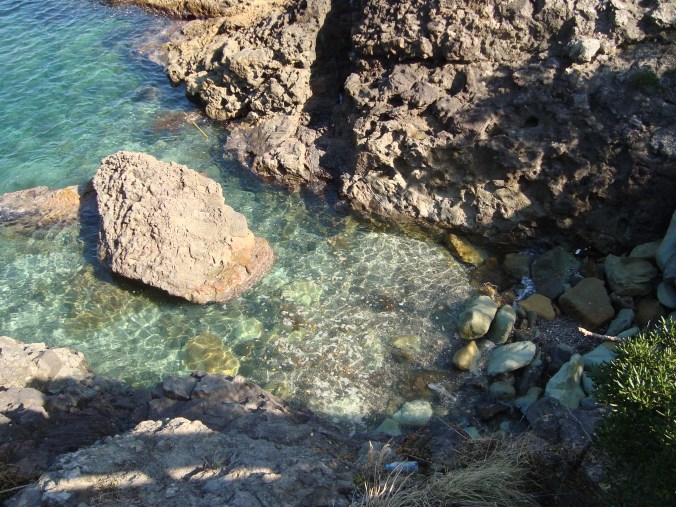
I live near the sea. It is about a 20-minute drive from my house to the sea. I feel that I am lucky to live so close to it. Many people visit the beach and the sea in summer, but I don’t. I like to visit the sea in spring or autumn. Sometimes, I go in winter. The wind is fresh, and there are no other people around.

DSC07400

When I was a child, I went to the beach every summer. My family and I went on holiday to the seaside for two weeks every August. The beach was always packed (packed = crowded) with other families. I used to make sand castles and go paddling (walking in the shallow water) in the sea.

DSC07407

Now, I drive to the sea, park my car, and enjoy listening to the sound of the sea and breathing the fresh sea air. Sometimes I write poetry. I think that being near the sea makes me more creative. Maybe it is the rhythm of the waves, or maybe it is the beautiful views, but when I go to the sea, I feel like I want to write.

DSC07408

Last November, I went for a drive by the sea. The photographs on this page are from then.

When is your favourite time to go to the sea?

Heather @ I Talk You Talk Press

I’m dreading it!

Do you know the phrase “I’m dreading (something)“? Read the conversation below. Can you guess the meaning?

Gwen: Are you prepared for your job interview tomorrow?

Claire: Yes, but I’m dreading it! I hate job interviews.

Does it mean:

a) to be worried and scared about something

b) to hate doing something

c) to be looking forward to something

d) to be upset about something

The answer is below!↓

businesswomen businesswoman interview meeting

Photo by Tim Gouw on Pexels.com


Answer: a) to be worried and scared about something

[Easy English Blog] How I learned Japanese

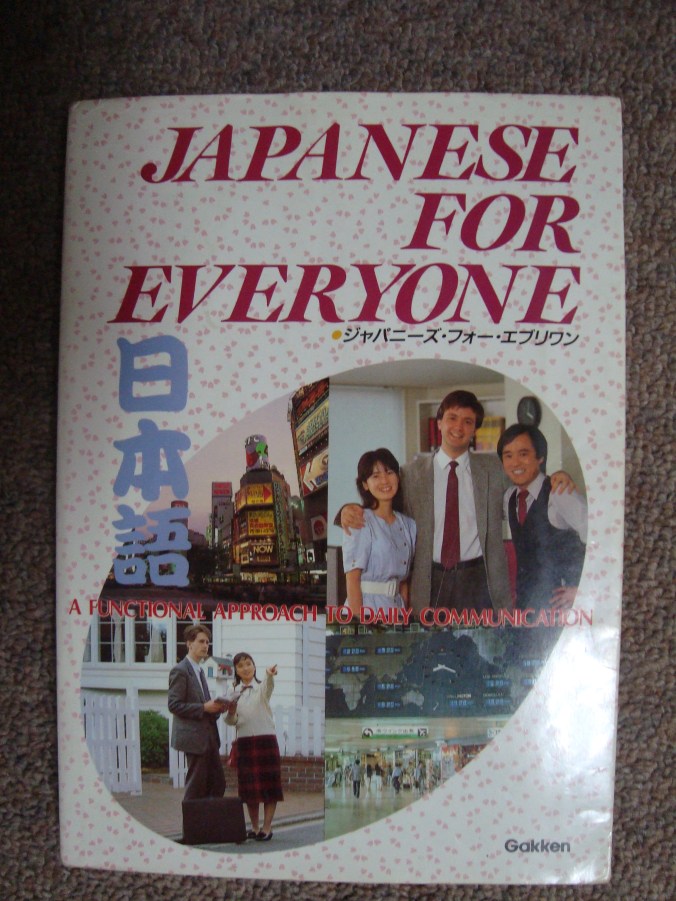
When I started learning Japanese 18 years ago, I didn’t have a computer. There were no apps, or language learning websites. I studied the “old way”. I started with a textbook called Japanese for Everyone.

Here it is. It was published in 1990.

DSC07706

It was a good book. It was easy to understand and I enjoyed the exercises. At the time, I wanted to take the Japanese Langauge Proficiency Test (JLPT) (日本語能力試験). My goal was 1st grade. So, I bought textbooks for 4th grade, then 3rd grade, then 2nd grade and then 1st grade. I passed 1st grade in 2003 after studying for three years.

I also used books called Basic Kanji and Intermediate Kanji. I wanted to be a translator, so reading and writing was important for me. I started to read children’s books, manga and newspapers. I read every day. Of course, I didn’t understand everything, but reading helped me so much.

At the time, I was teaching English at a language school. I studied for three hours every night after work, and for eight hours on my days off. I always went to the library to study. It was quiet, and I could concentrate.

I was also lucky because I had nice Japanese friends. They would let me practice conversation with them, and help me when I didn’t understand some things. I think that conversation practice is very important. When I spoke to my friends, I tried to use the new words I had learned from my textbook. This helped me to remember the words.

For listening, I used to listen to CDs while I slept! I put a Japanese CD in my portable CD player, and played the CD all night while I was sleeping. Sometimes, I left the TV on while I slept. Did this help? I don’t know, but I got a good score on the listening section of the 1st grade test.

Now, I study other languages, but I don’t make much progress. I think my motivation level is different. I live in Japan, so I need to speak Japanese. Motivation is so important when learning a language.

I continue to study Japanese. I am a translator, so I read Japanese every day. I also read Japanese novels and non-fiction books for fun. I said before that I like Matsumoto Seicho. I also like Nakamura Tempu. I have read most of his books. There are still kanji and words I don’t know. Studying a language is a lifelong hobby!

How do you study languages?

Heather@ I Talk You Talk Press

Has the cat got your tongue?

Do you know the meaning of this question? Read the conversation below. Can you guess the meaning?

Boss: Can you tell me why business is so bad this month?

David: ………

Boss: What’s wrong? Has the cat got your tongue?

Does it mean:

a) why don’t you speak?

b) did the cat take your tongue?

c) do you have a tongue?

d) what happened to your mouth?

The answer is below!↓


Answer: a) why don’t you speak?

[Easy English Blog]Talking to friends and family

ground group growth hands

Photo by Pixabay on Pexels.com

I have been living in Japan for over 18 years. When I first came to Japan, I didn’t have a computer, and email was not so popular. I used to exchange letters with my family and friends. Now, of course, the world is different. We have social media and platforms like Skype. It is much easier to stay in touch (stay in touch = maintain contact) with family and friends.

I speak to my family in the UK every week, and my friends in other countries a few times a month. It seems like the world is a smaller place now.

A year or so ago, I found all the letters from my family and friends from 18 years ago. I had kept them in a box. I enjoyed re-reading them. They brought back memories. My friends and family wanted to hear about life in Japan. They didn’t have the Internet in their houses at the time, so they didn’t have much information about Japan. I wanted to hear news about my hometown and my friends’ lives. Now, I just have to look on Facebook to find out about my friends’ lives. And of course, there is a lot of information about Japan on the Internet now.

When I go back to the UK to visit friends and family, or when friends come to visit me, it is nice to see people, but it is different from before. Now, I can see everyone’s face on my computer screen every week or every month, so when I see them in person, it is not as special as it used to be.

When I first came to Japan, I was often lonely. I missed my family and friends. I was always excited to receive letters from them. Now, I don’t feel so lonely anymore. I just go on Facebook or Skype, and my family and friends are there.

How do you keep in touch with your friends and family?

Heather @ I Talk You Talk Press

The grass is……….

Can you complete this famous English saying? It means that people are not satisfied with what they have. They think other people are in a better situation.

The grass is…….

a) longer on the other side

b) brighter on the other side

c) shorter on the other side

d) greener on the other side

The answer is below!↓

clouds cloudy countryside farm

Photo by Pixabay on Pexels.com


d) greener on the other side

The grass is greener on the other side.

Example conversation:

Iain: I heard that Terry quit his job.

Fred: Yes, he has gone to work for a rival company. He thinks the grass is greener on the other side.

[Easy English Blog] Choco-monster!

close up view colorful candy chocolate

Photo by Caio Resende on Pexels.com

I have a bad habit. (Well, I probably have many, but today I’m just going to talk about one of them.) I eat too many snacks, especially when I’m working. Eating snacks – chocolate, candy, crisps, etc. helps me to concentrate when I’m writing. Well, I think it does. But maybe it doesn’t. Maybe I just got into the habit of eating when I write. I feel like eating snacks in the late afternoon, around 4pm. I feel like my body needs energy then.

This is not good for my health. I try to exercise every day, but sometimes this is difficult. I write and translate in the daytime, and I teach English at night. But this is no excuse! I must make time to exercise more. (Or stop eating snacks.) I could get up earlier and exercise before breakfast. I could swap chocolate and crisps for healtheir snacks. Japan has a wide range of healthy snacks. But when I go to the store I see the tasty crisps and chocolate, and buy them without thinking. Unfortunately, there is a store next to my house, so it is very easy for me to buy them. I need more willpower… (I have been saying this for years. My Japanese friends call me “choco-monster” because I eat too much chocolate!)

How about you? Do you eat too many snacks?

Heather@ I Talk You Talk Press